
SEO gets talked about like there's some secret combination of keywords, backlinks, and technical wizardry that will make Google fall in love with your website.
There isn't.
Good SEO is usually much less glamorous. It's figuring out what is already working, finding the opportunities hiding in the data, fixing the technical messes getting in the way, and then making the content genuinely more useful.
That's essentially what I did for this client.
When I started, the website was receiving consistent but relatively low organic traffic, and much of that traffic came from people already searching for the brand. The blog had plenty of content, but very little of it was earning meaningful search traffic.
A technical SEO audit uncovered several issues affecting the site's performance, along with a backlink profile that needed some attention.
The goal was straightforward: increase organic traffic, expand non-branded search visibility, and ultimately create more opportunities for lead generation.
The solution was not one magic SEO trick. It was a combination of technical SEO, content optimization, keyword research, internal linking, and ongoing analysis.
The SEO Strategy: Five Areas of Focus
I built the campaign around five areas:
- Technical SEO
- On-page SEO
- Content strategy and optimization
- Link strategy
- Monitoring and reporting
The important part was how these pieces worked together. Fixing technical problems made the site easier to crawl. Better on-page optimization made existing content more competitive. Content strategy gave the site a clearer topical structure. And ongoing reporting showed us where the strategy was actually working.
1. Technical SEO: Fixing the Problems Underneath the Content
Before trying to create more traffic, I wanted to make sure the website wasn't getting in its own way.
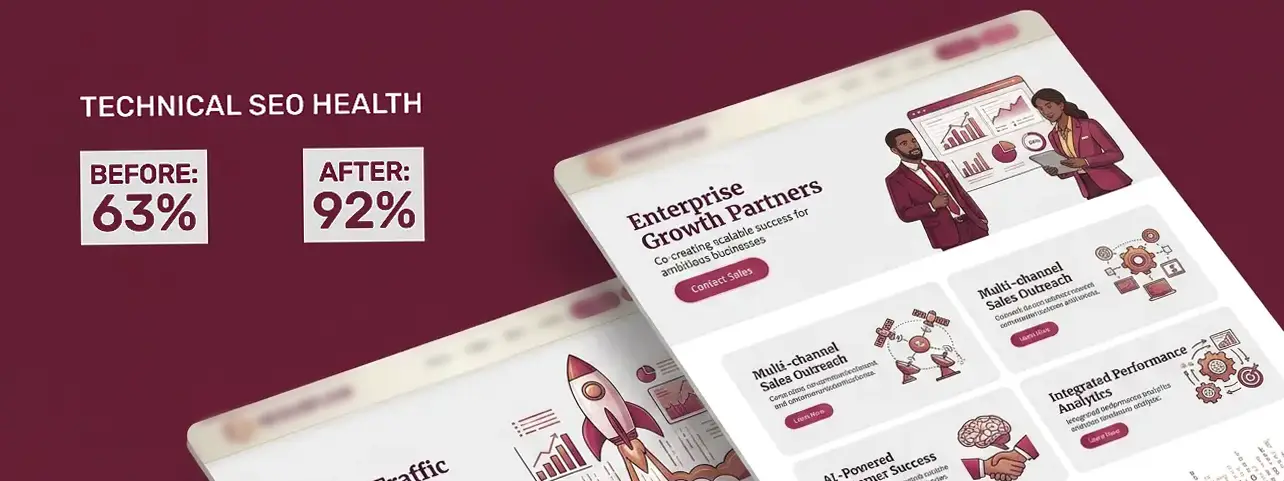
I used SEMrush, HubSpot's auditing tools, and Google Search Console to identify technical issues affecting the site, including problems with page speed, site architecture, and accessibility.
I addressed issues including:
- Improving page speed and mobile performance
- Streamlining site architecture
- Cleaning up URL redirect chains
- Improving semantic HTML structure
- Removing unnecessary CSS and JavaScript
- Compressing assets where appropriate
This work wasn't particularly glamorous. No one is throwing a parade because you cleaned up a redirect chain.
But technical SEO is infrastructure. If the foundation is shaky, everything you build on top of it becomes harder.
2. On-Page SEO: Making Existing Pages Easier to Find
Once the technical foundation was in better shape, I moved into on-page optimization.
I reviewed published and indexed pages and made improvements to elements including:
- Meta titles and descriptions
- Image compression and alt text
- URL structure
- Heading structure
- Keyword targeting
- Page content and relevance
The goal wasn't to cram keywords into every available corner of the page. It was to make each page clearer about what it was about, who it was for, and what search intent it served.
That distinction matters.
Good on-page SEO shouldn't make a page sound like it was written for a search engine.
It should make the page easier for both search engines and humans to understand.
3. Content Strategy: Finding the Traffic Hiding in Existing Content
This is where things got particularly interesting.
The client already had valuable content. The problem wasn't necessarily a lack of things to say. It was that some of the best material wasn't getting the visibility it deserved.
Instead of immediately recommending that we publish 50 more blog posts into the void, I looked at what was already there.
Because sometimes the answer isn't “make more content.”
Sometimes it's “fix the good stuff you already have.”
Building Topic Clusters
I organized the blog into topic clusters around relevant themes and established pillar pages to create a clearer content hierarchy.
Related blog posts linked to their corresponding pillar pages, while pillar pages linked back to relevant supporting content.
This helped create a more logical internal linking structure and made it easier to connect related topics across the site.
Finding Existing Posts Worth Optimizing
I also developed a process for identifying existing blog posts with untapped SEO potential.
I wasn't looking for posts that were already crushing it.
I was looking for the ones that were almost there.
The process looked at five things:
1. Existing Traffic
I used Google Analytics and Search Console to identify posts already receiving some organic traffic.
A little traffic was a good sign. It meant Google was already finding the page.
2. User Engagement
I reviewed engagement metrics to identify content that appeared to hold users' attention.
The idea was simple: if people were finding the content and actually sticking around, the page was worth investigating further.
3. Backlinks
I reviewed each post's backlink profile using SEMrush.
I wasn't looking for hundreds of backlinks. Even a small number of relevant links could indicate that a page had some authority to work with.
4. Existing Keyword Rankings
Search Console showed me which queries each post was already appearing for and where those keywords were ranking.
Pages ranking somewhere around positions 10–20 were particularly interesting.
Why?
Because they were already knocking on the door of page one.
Getting a page from position 17 to position 7 can be a much more attainable opportunity than trying to take a brand-new page from absolutely nowhere to the first page.
5. Final Selection
I combined those signals to identify six blog posts with the strongest potential for optimization.
These weren't necessarily the site's most popular articles.
They were the articles that gave me enough evidence to say:
There's something here. Let's see what happens if we actually work on it.
Content Optimization and Keyword Research
Once I identified the six posts, I conducted additional keyword and competitor research for each one.
I reviewed the search results, identified content gaps, analyzed competing pages, and looked for opportunities to make the existing articles more useful and more competitive.
Then I updated the content.
That included adding relevant information, improving the structure, refining keyword targeting, and expanding sections where the existing content didn't fully answer the searcher's question.
The posts were then republished with the updated content.
The point wasn't simply to make the articles longer.
It was to make them better.
That distinction is important because the internet already has approximately 47 million mediocre articles explaining things nobody needed explained.
We didn't need six more.
We needed six better ones.
4. Link Strategy: Internal Links, Backlinks, and Cleanup
Content optimization was only one piece of the strategy. I also worked on the site's link profile.
Addressing Problematic Backlinks
I conducted a backlink analysis in SEMrush to identify potentially harmful or suspicious links.
Where appropriate, I reviewed those links and used Google's disavow process for links that warranted it.
This was treated as cleanup rather than some magical ranking lever. The larger goal was to maintain a healthy backlink profile while focusing our energy on earning relevant, legitimate links.
Strengthening Internal Links
I also expanded the site's internal linking strategy.
Blog posts linked to relevant pillar pages, and pillar pages linked back to supporting content using descriptive anchor text.
This created stronger connections between related content instead of leaving individual articles floating around the site like digital islands.
Earning New Backlinks
Rather than relying solely on outreach, the primary backlink strategy was to make existing content competitive enough to earn links naturally through increased visibility.
I also recommended opportunities such as expert contributions, partnerships, and HARO to help the client pursue additional authoritative backlinks.
5. Monitoring SEO Performance and Reporting
SEO isn't particularly useful if you do a bunch of work and then disappear into the woods.
I monitored performance monthly and reviewed broader trends quarterly using Looker Studio, Google Analytics, and Google Search Console.
The reporting tracked changes in organic traffic, keyword visibility, and content performance so we could see what was actually moving.
Monthly reports were also shared with stakeholders to keep everyone informed about the campaign's progress.
This made it possible to adjust the strategy based on evidence rather than assumptions.
The Results: 52% Year-Over-Year Organic Traffic Growth
And, thankfully, the numbers agreed with the strategy.
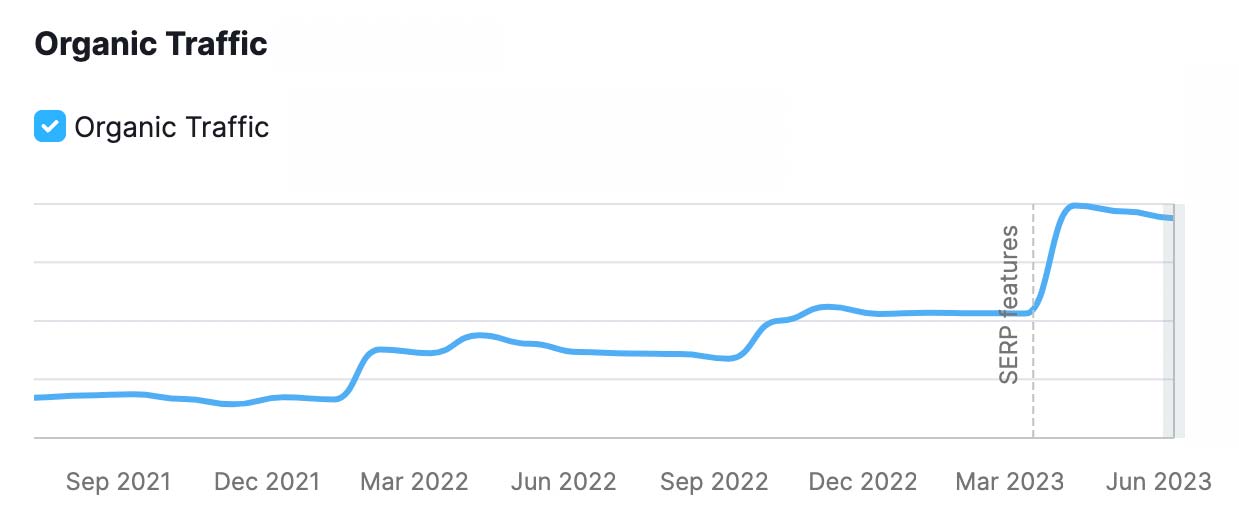
Organic traffic increased consistently throughout the campaign, averaging approximately 15% month-over-month growth.
Comparing 2022 with 2021, organic traffic increased by 52% year over year.
But the more interesting results showed up when looking beyond the headline number.
Organic Traffic Increased 70% in Q1
By Q1 2023, website traffic was 70% higher than Q1 2022.
Even pages that weren't directly optimized during the campaign experienced increased search visibility, with average visibility improvements of approximately 75%.
That's one of the reasons I like looking at SEO as a system rather than a collection of individual pages.
You optimize one part of a website, improve its structure and authority, and sometimes the benefits extend beyond the page you originally touched.
Non-Branded Search Traffic Became a Larger Source of Growth
One of the campaign's biggest goals was reducing the site's dependence on branded search.
At the beginning of the campaign, branded keywords accounted for more than 60% of organic traffic.
By the end, that share had dropped to approximately 16–20%.
That doesn't mean branded traffic became less valuable.
It means the website was reaching more people who weren't already looking for the company.
That's a much more interesting form of growth for a brand trying to expand its reach.
More Keywords Reached Page One
The campaign also produced significant improvements in keyword rankings.
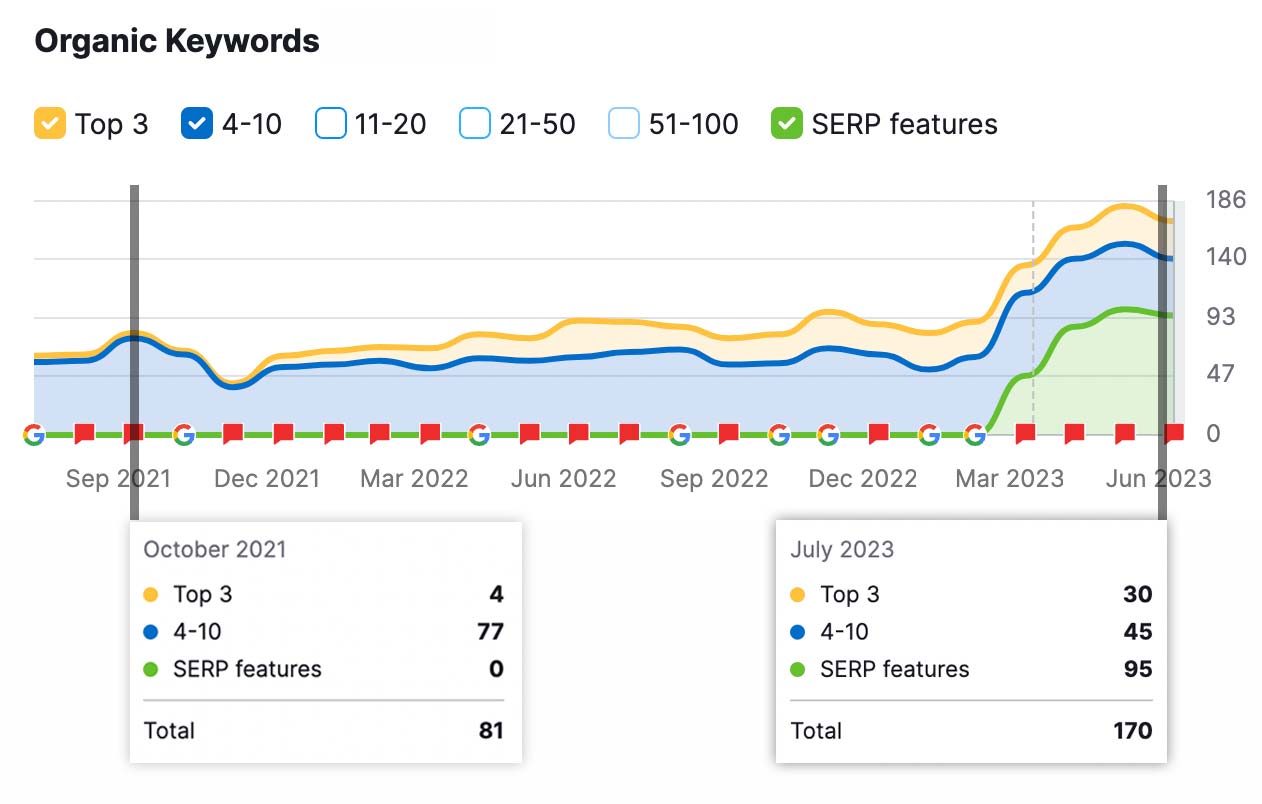
Since the campaign began in November 2021, the number of keywords reaching page one increased, with several featured snippet wins contributing additional visibility and traffic.
Again, the important thing wasn't simply accumulating a larger list of ranking keywords.
The goal was to increase visibility for relevant searches that could bring the right people to the website.
What This SEO Campaign Taught Me
The biggest lesson wasn't that technical SEO matters.
Everyone already knows that.
It was that you don't always need to create more content to create more traffic.
Sometimes the best opportunities are already sitting on your website.
The client had existing articles with traffic, engagement, backlinks, and keyword visibility. They just needed someone to connect the dots and figure out which ones were worth investing in.
The resulting 52% year-over-year increase in organic traffic came from a combination of technical improvements, better content, smarter keyword targeting, stronger internal linking, and consistent measurement.
There was no secret hack.
Just a lot of research, a lot of spreadsheets, and a willingness to dig through the data until something interesting appeared.
And, as it turns out, sometimes the boring SEO work is the work that actually works.
Client Feedback
“I want to give a special shout-out to Genesis Aguilar for her outstanding work, helping us elevate our brand. Thank you, Genesis Aguilar!”